In the autumn of 1989, a boy steps onto Alexanderplatz in East Berlin and walks into history without knowing it. The air is tense, the square watched by men in trench coats with party badges, yet the chants that rise are disarmingly simple, almost modest. “No violence.” “We are the people.” Within a year, the country whose leaders still believe themselves unshakable will be gone.
More than three decades later, the German Democratic Republic lives on in an uneasy half light, somewhere between nostalgia and amnesia. Surveys show that many young people know surprisingly little about the former East and, when they do have an opinion, tend to see it in a softened glow. The phrase you hear often, especially from die hard admirers of the “workers and peasants’ paradise,” sounds almost apologetic It was not perfect, but it was not all bad either.
That sentence does a lot of work. It summons images of guaranteed jobs and cheap rents, of holiday camps and allotment gardens, of neighbors who knew each other by name. It quietly pushes aside other images ruins still visible decades after the war, shop shelves thinly stocked, the permanent background hum of shortage. It also has no room for the simple fact that in this state there was no freedom of speech, no free press, no freedom of assembly or association, and no independent judiciary. You were not allowed to go wherever you wished, and those who tried to escape risked being shot at the border.
Every political system tells stories about itself, but dictatorships depend on them. In the GDR, the master story was anti fascism. The ruling Socialist Unity Party presented its state as the moral answer to Hitler, a new beginning that had supposedly eradicated the roots of fascism through expropriation and socialist planning. East Germans were encouraged to see themselves, and even their parents, not as perpetrators or bystanders but as victims or quiet resisters who had stood on the right side of history together with the Red Army.
Anti fascism filled school lessons, parades, slogans, film, and literature until the words themselves began to feel hollow. Concentration camp memorials were carefully maintained, but the genocide of Europe’s Jews was framed as one crime among many, subordinate to the story of communist resistance. The term “fascism” was deliberately used instead of National Socialism in order to keep the word “socialism” free of associations with mass murder, a linguistic trick that would have pleased Orwell.
What was pushed aside in this official memory is striking. There was little discussion of the enthusiasm with which millions had supported Hitler, or of how many Germans had enriched themselves from stolen Jewish property. Even the banal detail that Zyklon B had once been produced in Dessau, in what later became East Germany, rarely appeared in teacher training. The past was curated, pruned, and polished to fit the needs of a state that wanted to be both morally superior and politically untouchable.
If the official story was rigid, private memory was anything but. Some remember the GDR primarily as a dense web of controls, from kindergarten files to workplace informers, from the Party’s grip on careers to the quiet terror of the Stasi’s prisons. Others recall good teachers, solid vocational training, summer camps, and the security of knowing that the basics of life would somehow be provided. Many carry both sets of memories at once.
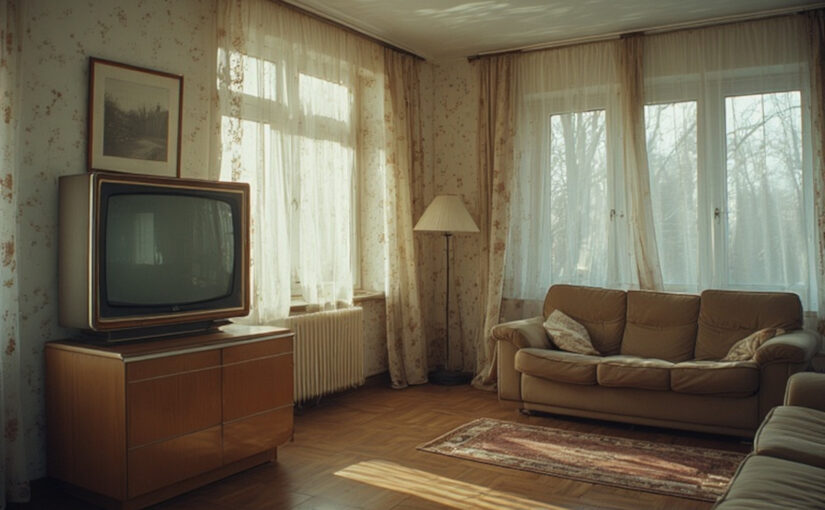
This tension feeds today’s Ostalgie, the fond longing for Spreewald gherkins, sturdy Trabants, and the bright logos of vanished state brands. It is easy to smile at the kitsch, harder to confront what falls out of the frame when the past is turned into a retro living room. Those who nostalgically praise the coziness seldom mention that dissenters could expect surveillance, persecution, prison, or a one way ticket to a labor camp. They rarely mention the political elite living comfortably behind guarded fences while ordinary citizens queued for fruit or meat.
The question, posed early in the book, is blunt Why deal with the problems of a failed state today. Because forgetting is not neutral. The less is known about how a dictatorship worked, the easier it becomes to trivialize its violence or to recycle its excuses. The history of the GDR is not merely a regional story about a vanished country, it is a case study in how power wraps itself in noble words while grinding down the people it claims to protect.
The boy on Alexanderplatz, surrounded by plainclothes men and chanting protesters, watched a system crack in real time. The regime still had its myths, its slogans, its rituals, but it had already lost something more important the belief of its own citizens. Remembering that moment in all its complexity, both the courage and the fear, the shortages and the small solidarities, is one way to resist the comforting blur of “it was not all bad.”
Agony and Barbed Wire: The Grim Reality of Former East Germany